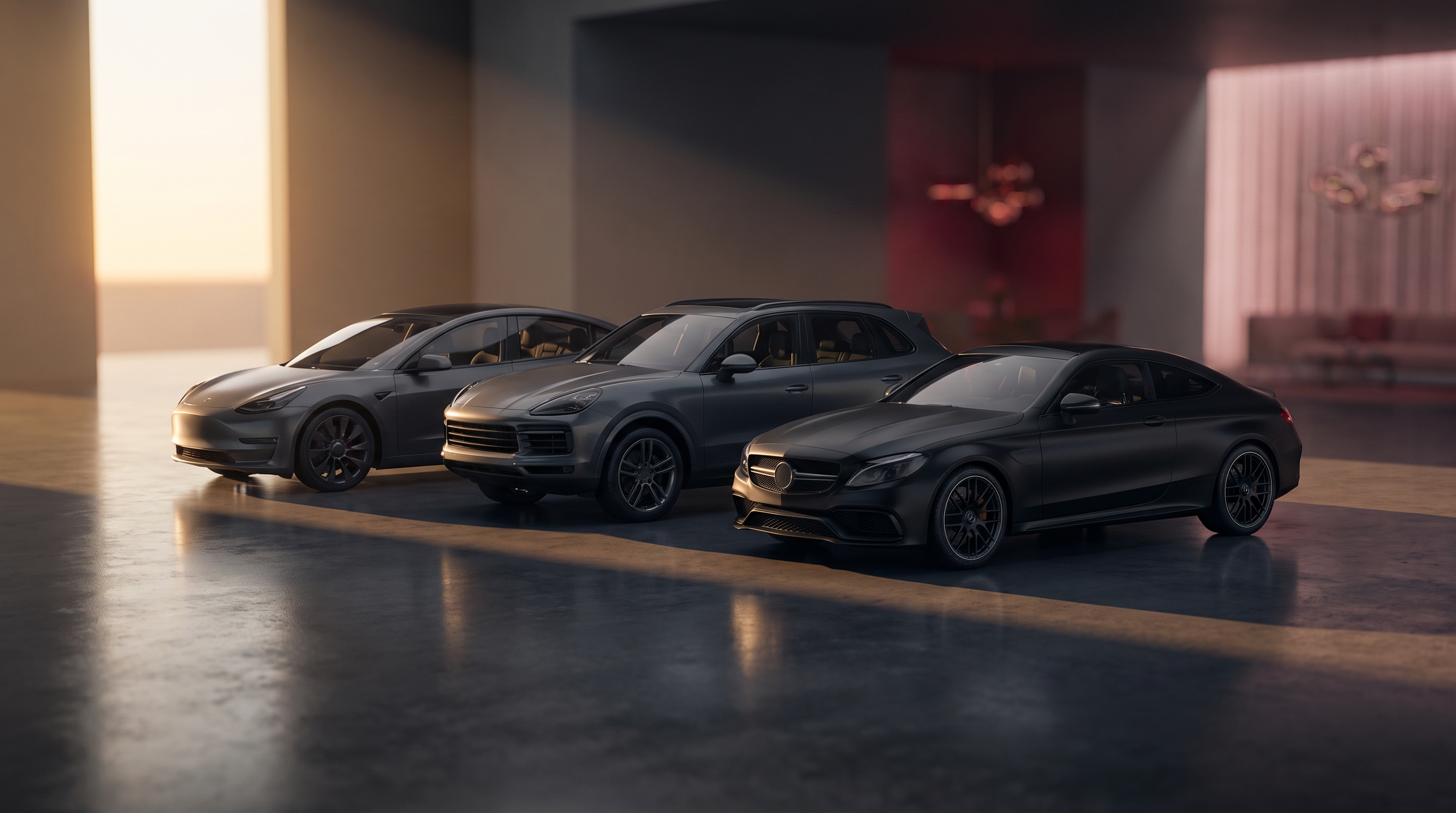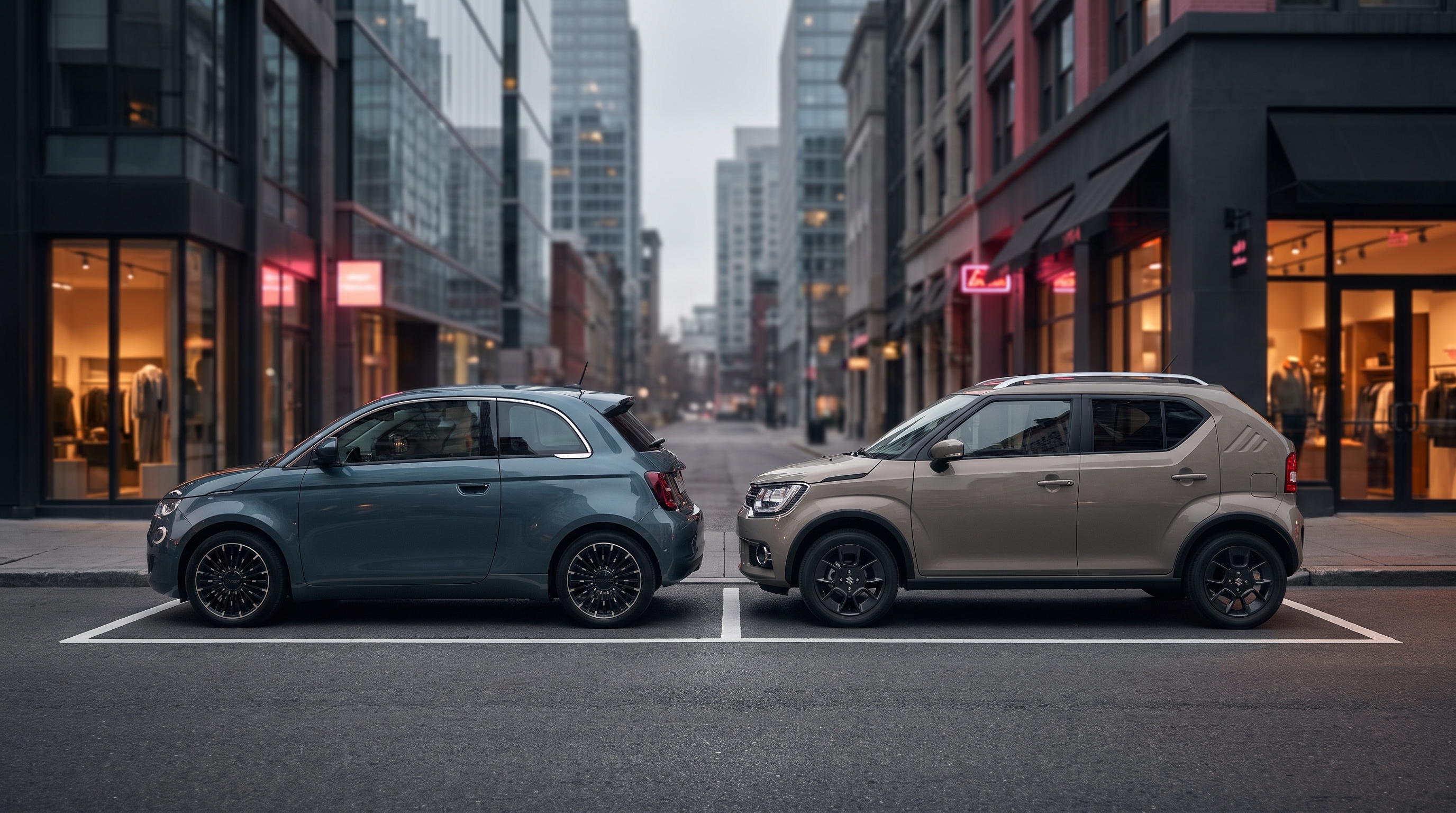
For most urban drivers, the best city body style is a subcompact or compact hatchback: it pairs the shortest overall length (street parking) with the tallest, widest cargo opening (daily errands). A small crossover becomes the better answer when your binding constraint is ride height — easier entry, child-seat loading, or seeing over traffic. Everything else — sedan, coupe, wagon, pickup — is right only when a frequent, specific need beats the two things you do most in a city: park and load.
The useful question is not “which body style is best” but “which constraint bites me every day.” Here is how to find it.
Parking: overall length and mirror-to-mirror width decide fit, not class names
Two dimensions govern whether a car fits where you live: overall length (parallel spots, garage depth) and width including mirrors (garage entrances, narrow two-way streets, cars parked close beside you).
Two traps to avoid:
- Class names are marketing segments, not measurements. A “subcompact crossover” can be nearly as long as a compact hatchback — just taller. Hatchback versions of a platform are also typically shorter than the sedan versions built on it, because the sedan’s trunk extends the rear overhang. Compare the spec sheet’s overall length, never the badge.
- Published width usually excludes mirrors. The spec-sheet figure is typically body width; the number that scrapes a garage pillar is mirror-to-mirror. Find that figure in the owner’s manual or manufacturer spec pages before you rule any garage or parking structure feasible.
Add the turning circle (curb-to-curb) for narrow-street U-turns and three-point turns. It varies more within a class than most buyers expect — two hatchbacks of similar length can differ meaningfully — so put it on your veto list, not your nice-to-have list.
One boundary to keep clear: driver-assist tech mitigates visibility, not fit. A 360-degree camera makes a long car easier to place precisely; it does not make the car shorter, and the space either holds it or it doesn’t.
Visibility: taller seating helps forward, glasshouse design decides rearward
These are two different problems, and body styles solve them separately.
- Forward sightlines improve with seating height. Sitting higher in a crossover lets you look over roofs and hoods further down the block — genuinely useful in dense, stop-and-go traffic.
- Rear-quarter visibility is decided by the glasshouse: beltline height, pillar thickness, and rear-glass rake. Many modern crossovers and sedans trade upright rear glass for styling and grow over-the-shoulder blind spots. Boxier hatches and wagons with large rear windows tend to do best.
For the parking-maneuver half of this, the market has largely converged: rearview cameras have been required on new U.S. vehicles since May 2018 under NHTSA’s rearview visibility rule, so new-car shoppers get camera assistance regardless of body style. What a camera does not fix is spotting a cyclist or scooter filtering alongside you in moving traffic — that is where glasshouse design still earns its keep. Verify on the specific model, because visibility varies by generation and trim, not by body style alone.
Cargo: the opening is the spec that matters, not the liter count
Trunk-volume figures measure enclosed space, often counted under the parcel shelf. What decides whether the stroller, the flat-pack shelf, or the hockey bag actually loads is the aperture — the size and shape of the opening — plus the load-floor height.
The mechanism: a sedan can post trunk-liter numbers similar to a hatchback’s and still refuse bulky items, because the trunk lid and parcel shelf turn the bay into a slot, and folded rear seats connect only through a pass-through. A hatchback’s opening is the entire rear of the car; fold the seats and you get one tall, continuous bay. A wagon adds load length to that same advantage. A crossover adds load-floor height: easier to roll a suitcase in, higher to lift a heavy box — pick based on which motion you repeat.
Failure mode worth naming: buyers compare sedan liters on paper, then discover the stroller loads only diagonally, through the pass-through, with the seats down — in the rain.
One genuine sedan advantage, for balance: an enclosed trunk hides cargo from view, where a hatch’s glass shows everything. If “locked and invisible” matters more to you than “bulky and often,” a sedan is a defensible city pick.
Ride height: what taller seating buys, and what it costs
Buys: seat-at-hip-height entry and exit (knees and backs notice), less stooping to load a child seat, and better forward sightlines in traffic.
Costs: a higher center of gravity softens immediate handling response — more body lean in quick lane changes — and taller, heavier crossovers generally use more fuel than the hatchback or sedan on the same platform. Neither cost is a veto; both are prices to weigh against the benefits.
Also retire one false interpretation: ride height is not a safety rating. Crash performance is a property of the specific model’s structure and equipment, not of the body style — check the individual car’s NHTSA and IIHS results rather than extrapolating from seating position.
City fuel use: powertrain choice usually beats body-style choice
Stop-and-go driving punishes mass. Every stop throws away, as brake heat, the energy spent accelerating — in a conventional car. A hybrid powertrain recaptures part of that energy, which is why hybrids hold up disproportionately well in city conditions.
The practical consequence: in dense urban use, choosing a hybrid over a non-hybrid typically moves your fuel spend more than choosing between a hatchback and a small crossover — and hybrids are increasingly offered in both body styles. Do not assume “small car = efficient”; weight and powertrain within a class can swing city consumption more than the class itself. Compare the exact trims on your shortlist at fueleconomy.gov rather than relying on body-style reputations.
Body styles that fight the city — and the exceptions that justify them
- Full-size pickups: bed length plus width is a double veto for street parking. Exception: you haul dirty or bulky cargo weekly.
- Coupes: two long doors need more swing clearance in tight spots than four short ones. Exception: a solo driver with a private garage.
- Three-row SUVs: overall length is the veto. Exception: a dedicated parking space plus genuinely regular full loads.
- Sedans: rarely optimal, defensible if you value enclosed, hidden cargo and rarely load bulky items.
- Wagons: nearly the hatchback’s virtues plus road-trip length; the real constraint is market availability, not city fit.
How to run this decision in CarSwype Match
- Swipe by vibe, not by body style. Start from needs-based vibes like “easy to park” so candidates surface across segments instead of anchoring you to one silhouette.
- Save contenders with a constraint note. One line each — “fits my 17-ft spot,” “tailgate fits the stroller,” “seat height works for my knee” (illustrative examples). A note that cannot name a constraint means you like the car, not that it fits the problem.
- Compare two or three on veto dimensions first. Length versus your spot, mirror width versus your garage, turning circle versus your street — before preferences like ride height and load-floor height.
- Measure before you drive. Get your spot’s and garage’s real dimensions, then pull the specific trim’s published dimensions, since trims and packages can change them.
- Watch for the shrinking-list signal. If your saved list keeps growing past five or six, or your notes contradict each other — one car saved for parking, another saved against it — you have not found your binding constraint. Go back to step 2. A healthy shortlist gets shorter.
CarSwype Match is built for the discovery and shortlist stages. The final call still needs a test drive on your actual streets, a walk-around with your real cargo, and checks against official specs, insurance, and market pricing.