Comparing trim levels is a packaging decision, not a quality decision. Within one model line, the base trim and the top trim usually share the same body, the same assembly line, and most of the same powertrain options; what changes is the bundle of comfort, tech, and appearance features attached to it. So the useful question is not ‘which trim is best’ but ‘which two or three features change my actual week, and what is the lowest trim that includes them?’ Everything above that line is priced emotion — fine to buy on purpose, wasteful to buy by accident.
What a trim level actually changes (and what it doesn’t)
A trim level is a bundle, and the bundle exists to move you up the trim ladder — the ordered sequence from base to top. Product planners deliberately place one or two high-demand features high in the ladder so buyers climb past trims they would otherwise pick. When you feel pulled from the mid trim to the top one, that pull is the mechanism working as designed.
Three things to keep straight:
- Trims rarely differ in build quality. The higher trim is not better made; it is the same car with more equipment. More equipment also means more components — power seat motors, sunroof mechanisms, extra electronics — that can eventually need service. Higher trim does not mean more reliable by definition.
- Trim names don’t translate. ‘SE’, ‘Sport’, and ‘Limited’ are marketing labels. A Sport trim at one brand is not comparable to a Sport trim at another, and the same trim name can change content between model years. Never compare names across brands, and never assume this year’s SE matches last year’s.
- Some things are shared across the ladder, some aren’t. On many models, core body structure and some driver-assist features are standard across every trim, while wheels, suspension tuning, and seat equipment vary. Verify per model rather than assuming either way.
The week-mapping test: which features change daily use
The filter that separates daily-use features from emotional ones is simple: a feature earns ‘daily use’ only if you can name the recurring moment in your week where it appears. Take ten minutes and write down a real week — who drives, what weather, where you park, kids or pets, what your phone does in the car. Then test each feature against it.
Features that pass the test most often:
- Your body. Power seats with memory matter if two drivers swap the car regularly — a manual seat readjusted twice a day is a small tax paid every single drive. Heated seats and a heated steering wheel matter in genuinely cold climates. Seat material matters with kids or pets, because cleanup frequency is a daily-use question, not a style question.
- Your phone. Phone integration, screen size and placement, port locations, and whether the wireless charging pad actually fits your phone get touched on every trip. This is where you spend the most interaction time in the car, so it’s where trim differences are felt most.
- Your route. Blind-spot monitoring pays off if your commute involves constant merging (treat it as an awareness aid, not a safety guarantee). Adaptive cruise earns its cost on long highway distances. Parking sensors and a good camera matter if you park in tight structures. Headlight quality matters on dark rural roads.
- Your household logistics. Keyless entry and start matter with armloads of groceries. A power tailgate matters if you load bikes or boxes weekly. Second-row access matters with car seats.
If you cannot name the moment, the feature is showroom appeal — for you, at this point in your life. That can change: ventilated seats are emotional in a mild climate and daily-use in a hot one.
Upgrades that are mostly emotional
These are the common ones, and ‘mostly’ is doing real work — several can flip categories depending on your situation:
- Bigger wheels. Larger wheels usually mean lower-profile tires: a firmer ride, more expensive replacements, and on some configurations a small efficiency penalty. Check the exact configuration’s official figures (for U.S. shoppers, fueleconomy.gov) rather than assuming.
- Premium paint, badges, and trim-specific styling. Purely visual. You’re allowed to care — just know that’s what the money buys.
- Ambient lighting. Noticed for the first week, then absorbed into the background.
- Sunroofs. Many buyers rarely open them after the novelty fades (opinion, but a durable pattern), and a sunroof adds a mechanism that can need service over a long ownership while costing a little headroom.
- Premium audio. Real if you’re a listener with a long commute; emotional if music is background noise.
A useful framing is cost per use. Illustrative example: if the trim step that adds heated seats costs $1,800 and you use them 120 mornings a year for five years, that’s about $3 per use. Run the same rough math on a feature you’d touch twice a year and the picture changes fast. The numbers here are illustrative — substitute real prices and your own usage.
Run the comparison bottom-up, not top-down
Most buyers comparison-shop top-down: they see the loaded demo car, fall for it, then work backward. Do the reverse.
- Write the week. Ten minutes, real detail.
- Cap your must-haves at about three features. A longer list usually means the ladder is working on you, not that your needs expanded.
- Find the lowest trim that includes all must-haves. That’s your anchor — not the top trim minus a discount.
- Check what that trim forces on you. The trim with your feature may bundle extras you don’t want; that bundle has a price.
- Price the package route. A mid trim plus an option package sometimes undercuts the next trim up and skips the forced extras. Occasionally a single standalone option — a tow hitch, heated seats — dissolves the whole ladder question.
- Test drive the exact trim you’d order, not the demo. Dealers demonstrate the top of the ladder, and on some models higher trims ride on different wheel sizes and suspension tuning — the demo’s ride is not necessarily your ride.
Failure check as you go: if your must-have list keeps growing while you read trim charts, stop. That growth is the packaging strategy succeeding, and it’s the most common way trim comparisons go wrong.
Where trim comparisons go wrong
- Anchoring at the top. Starting from the loaded car makes every lower trim feel like loss, instead of every higher trim feeling like a choice.
- The resale argument, unexamined. ‘The higher trim holds its value’ justifies a lot of spending. As a general principle rather than a statistic: condition, mileage, powertrain, and color usually move used prices more than the trim badge. Check actual used listings for the model you’re considering — the resale gap between trims is often smaller than the gap you paid new.
- Lot reality. The value trim is frequently not on the dealer lot, because dealers stock what turns over fast. The hidden price of the smart choice can be a factory-order wait — decide upfront whether you’ll accept it, or you’ll get upsold in a weaker moment on the lot.
- Market drift. Feature packaging can differ by region and changes between model years. Before finalizing, confirm availability on the manufacturer’s official configurator for your market and model year.
Where CarSwype Match fits
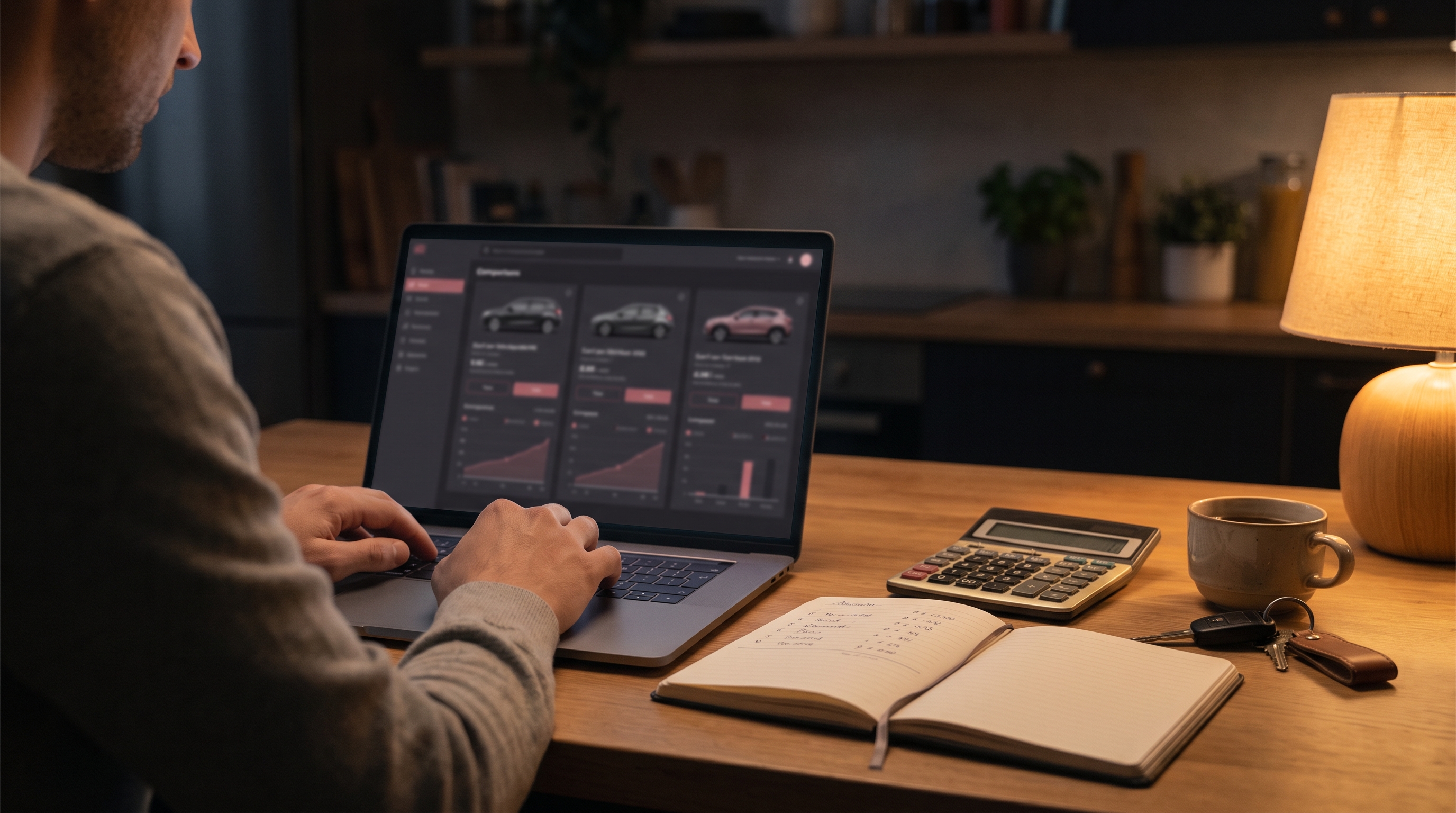
CarSwype Match is built for exactly this front end of the decision: swipe through cars, shortlist contenders, and capture your thinking while it’s fresh. The highest-value habit is writing private notes in your own words against your week-mapping list — ‘needs power tailgate, hauls bikes weekly’, ‘manual seat fails, two drivers swap daily’. Later, put two or three finalists in the comparison view and let the notes, not the brochure, make the argument.
The app won’t tell you what a specific trim includes for a given model year, and it doesn’t replace the manufacturer’s configurator, a test drive of the exact trim, or a final check on official specs. Use it to narrow the field and keep your reasoning honest; finish the decision with the official tools.
The verdict
Pick the lowest trim that contains the two or three features you can map to real moments in your week, verify whether a package beats jumping a rung, and test drive that specific trim. Buy emotional upgrades only when you can name what they’re for — sometimes the honest answer is ‘I’d enjoy it’, and that’s a legitimate reason. It’s just a different purchase than the one the trim ladder is trying to sell you.