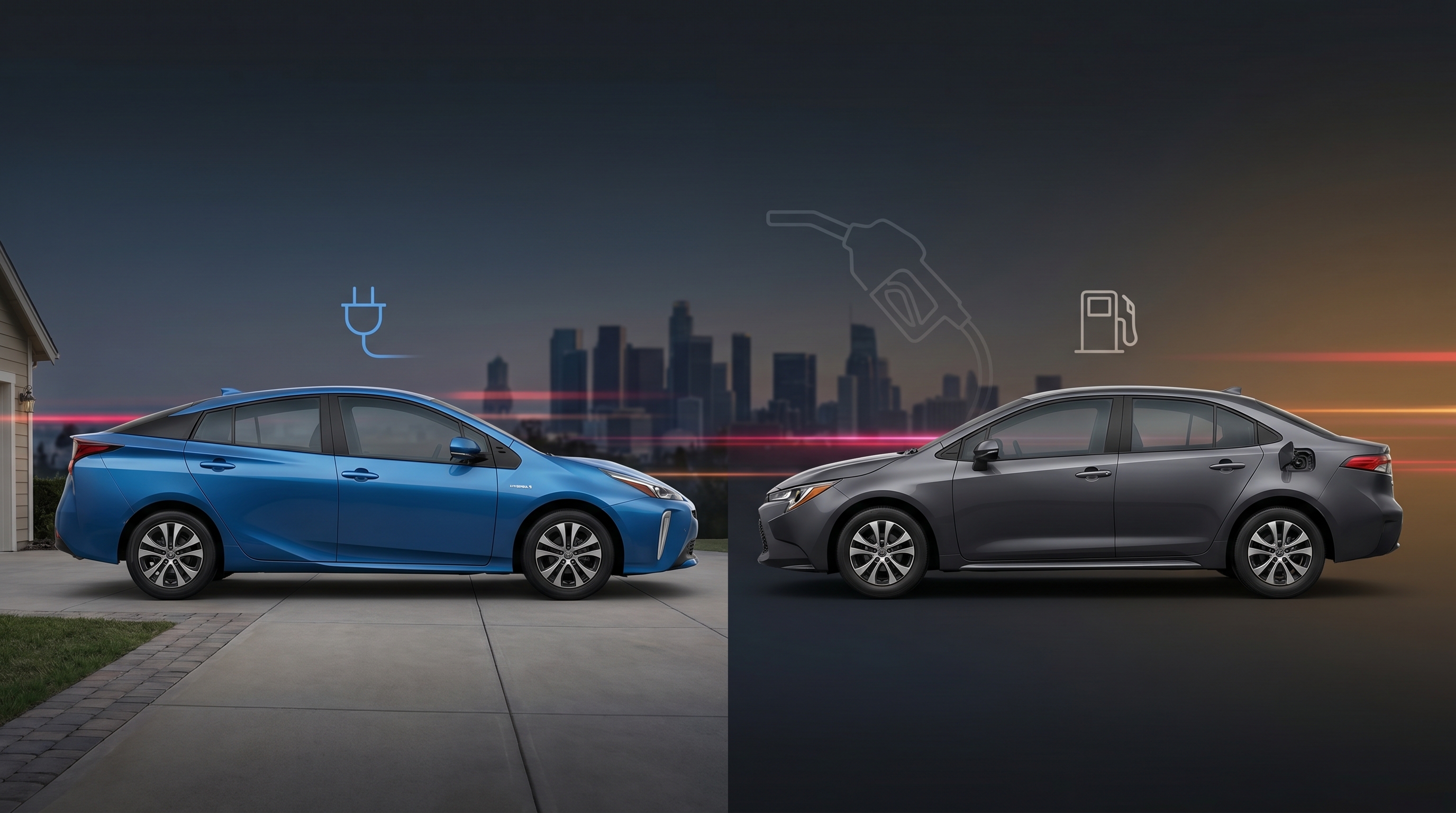
The Short Answer
The choice between a hybrid and a gas car comes down to three things: how much you drive, what kind of driving you do, and whether your budget can absorb the higher upfront cost of a hybrid for long-term fuel savings.
There is no universal right answer. A hybrid that saves one driver significant money per year might save another driver very little. A gas car that fits one buyer’s budget might leave another buyer frustrated at the pump.
When Hybrids Actually Save Money
Hybrids perform best in city driving and heavy traffic. Stop-and-go conditions let the electric motor assist the gas engine and capture energy through regenerative braking. Highway driving, where speeds stay constant, gives hybrids less of an advantage.
Illustrative example: A driver who commutes 20 miles each way through city traffic in a midsize hybrid sedan might use noticeably less fuel than the same driver in the gas version of that sedan. A driver who commutes 40 miles each way on the highway at steady speeds might only see a modest difference.
To estimate your potential savings, you need three numbers:
- Annual miles driven
- Percentage of city versus highway driving
- Current fuel prices in your area
The fueleconomy.gov website provides side-by-side fuel cost comparisons for specific models.
The Upfront Cost Gap
Hybrids typically cost more than comparable gas versions of the same vehicle. This premium reflects the battery pack, electric motor, and power control systems.
For the fuel savings to cover that premium, you need to keep the car long enough or drive enough miles. Buyers who trade in every 3-4 years may never recover the hybrid premium. Buyers who keep cars for 8-10 years and drive above-average miles are more likely to come out ahead.
False interpretation to avoid: A hybrid is not automatically the cheaper choice. The total cost of ownership depends on your specific driving patterns, how long you keep the car, and fuel prices during your ownership period. Some buyers choose hybrids for environmental reasons, which is valid, but that is a different calculation than pure cost savings.
Driving Pattern Checklist
Use this quick assessment to see which direction leans right for you.
Lean toward hybrid if:
- You drive more than 12,000-15,000 miles per year
- Your commute involves city or suburban streets with traffic signals
- You encounter regular stop-and-go traffic
- You plan to keep the car 6 years or longer
- Fuel prices in your area tend to run above the national average
Lean toward gas if:
- You drive fewer than 10,000 miles per year
- Most of your driving is highway at steady speeds
- You trade in or sell cars every 3-5 years
- Your upfront budget is tight
- You prefer simpler powertrain components
These are tendencies, not rules. A high-mileage highway driver might still prefer a hybrid for its range and fewer fuel stops. A city driver with a short commute might never recoup the hybrid premium.
Ownership Complexity
Hybrids add components: battery packs, electric motors, inverters, and cooling systems for the battery. This does not mean hybrids are unreliable. Many mainstream hybrids have demonstrated strong long-term reliability over the past decade and a half.
However, complexity has tradeoffs:
- Battery replacement outside warranty is expensive, though most hybrid batteries last 8-15 years
- Some independent shops may not service hybrid powertrains, limiting service options in certain areas
- Hybrid systems add weight, which can affect handling in some models
Gas cars have simpler powertrains with fewer specialized components. This can mean more service options and potentially lower repair costs for certain issues. But gas cars also have wear items that hybrids reduce, such as brake pads—regenerative braking extends brake life in hybrids.
Budget Fit Beyond Fuel
The purchase price difference between hybrid and gas versions affects more than the sticker. It changes your monthly payment, insurance costs, and potentially your loan terms.
Illustrative example: A moderate premium on a hybrid, financed over 60 months, might add roughly $50-60 per month to the payment. If the hybrid saves a similar amount per month in fuel, the net monthly benefit is small during the loan period. The savings accumulate more clearly after the loan is paid off.
Insurance costs can also differ. Some insurers charge slightly more for hybrids due to higher replacement costs for battery components. Others offer discounts for hybrids classified as eco-friendly. The difference is usually small but worth checking with your insurer before deciding.
Where CarSwype Match Fits
CarSwype Match helps you compare hybrid and gas versions of similar vehicles side by side. When you save contenders to your shortlist, you can write private notes about fuel costs, driving patterns, and budget considerations.
The app is designed for early discovery and comparison. It does not replace test drives, fuel economy calculations based on your actual driving, or financing reviews. Use it to narrow down which hybrid and gas models deserve a closer look, then verify the numbers yourself.
How to use the workflow:
- Set your driving vibe preferences to match your typical commute
- Swipe through both hybrid and gas versions of models you are considering
- Save your top contenders to your shortlist
- Add private notes about your annual mileage and fuel price expectations
- Compare two or three finalists on the factors that matter to you
Common Mistakes
Assuming hybrids always save money. Fuel savings depend on driving patterns, annual mileage, and how long you own the car. A hybrid purchased for a low-mileage driver who sells in three years may cost more overall than a gas equivalent.
Ignoring your actual driving mix. EPA estimates combine city and highway ratings, but your real-world results depend on how you actually drive. Track your current driving patterns for a month before deciding.
Forgetting total cost of ownership. Fuel savings are one component. Factor in purchase price, financing, insurance, expected maintenance, and resale value. Hybrids often hold value better in markets where fuel costs are high, but this varies by region and model.
The Decision Framework
Start with your annual mileage and driving mix. If you drive less than 10,000 miles per year with mostly highway commutes, gas is likely the more cost-effective choice. If you drive more than 15,000 miles per year with significant city driving, a hybrid deserves serious consideration.
Then check your budget. Can you absorb the hybrid premium without straining your monthly payments or insurance costs? If yes, run the fuel savings math for your specific situation.
Finally, test drive both versions of any model you are considering. The driving feel of a hybrid can differ from its gas counterpart, and personal preference matters for something you will drive daily.
There is no wrong choice if the decision is based on your actual habits and numbers rather than general assumptions.