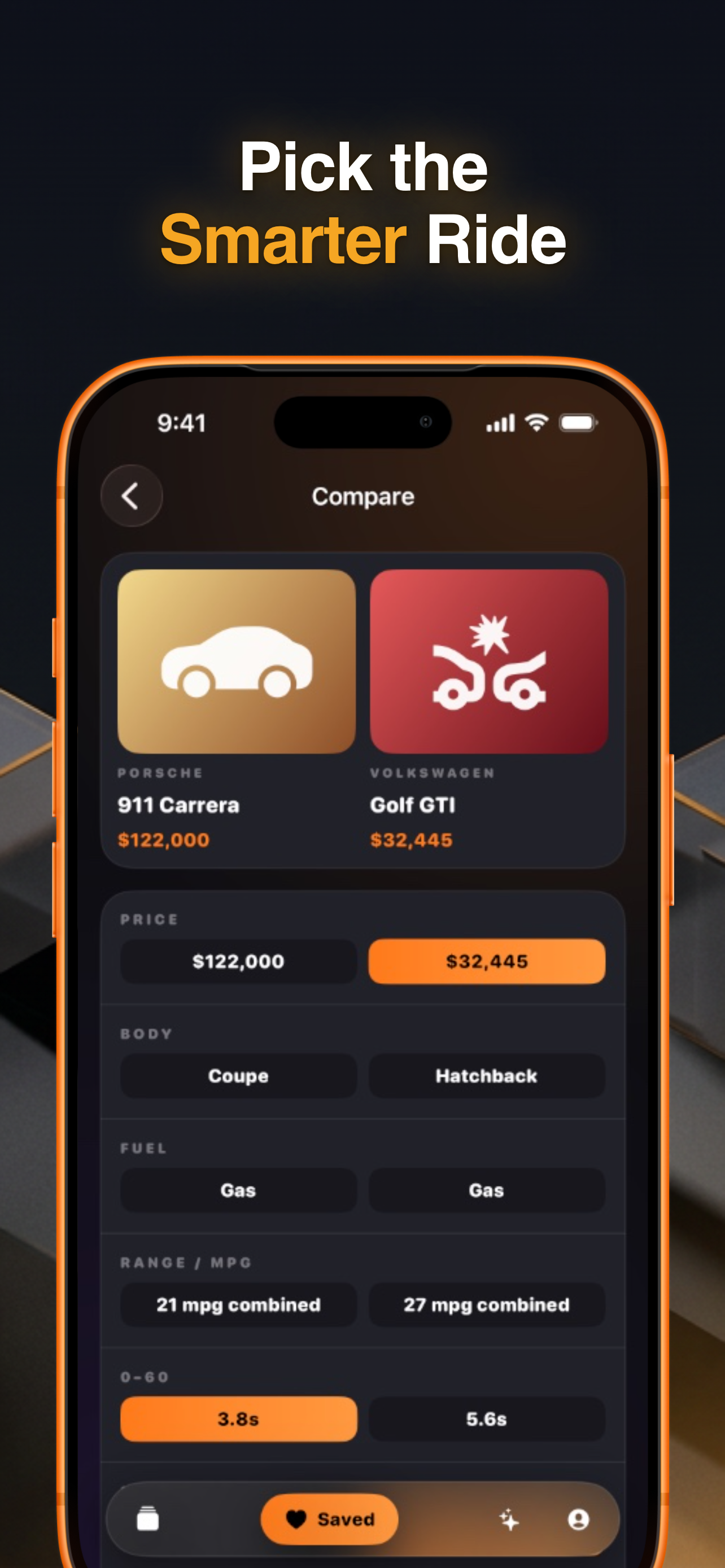
Spreadsheets can help serious buyers, but they also create a trap: every row looks equally important. Horsepower sits beside cargo space. Fuel type sits beside styling notes. A discount sits beside a concern about comfort. The sheet grows, and the decision does not get clearer.
A better comparison starts smaller.
Compare only real contenders
The useful number is two or three. More than that and the buyer is usually still discovering, not deciding.
Before comparing, ask whether each car has earned a place:
- Would you actually book a test drive?
- Does the price range fit the plan?
- Does it solve the daily job?
- Is there something about it you actively like?
If the answer is no, it belongs back in discovery, not in the final comparison.
Make tradeoffs visible
Good comparison is not just a spec table. It should show the tradeoffs that matter for the buyer.
One car may be cheaper and more efficient. Another may feel better to drive. A third may have the space the family needs. The decision depends on which compromise the buyer can live with after the excitement fades.
CarSwype Match keeps saved notes and match context near the comparison so those tradeoffs do not disappear behind generic specs.
Keep the final step human
No app should pretend to replace a test drive, inspection, or financing review. The goal is to reduce noise before those steps happen.
Use the app to find the few cars that deserve time. Use notes to remember why they made the list. Use comparison to make the tradeoffs plain. Then make the final call with the real car in front of you.